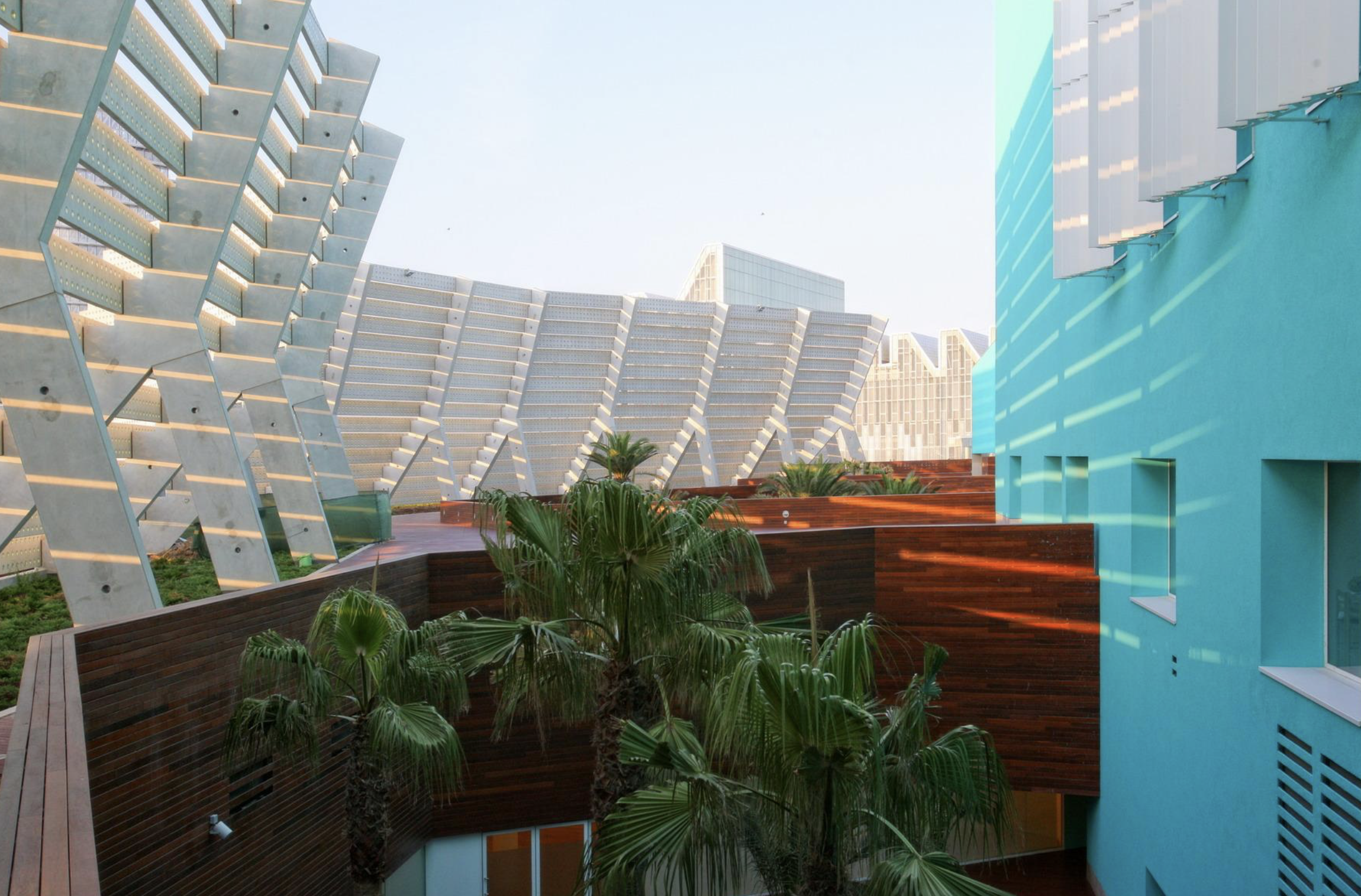
Hotel Hiberus Zaragoza,Just for the Pleasure of Sharing
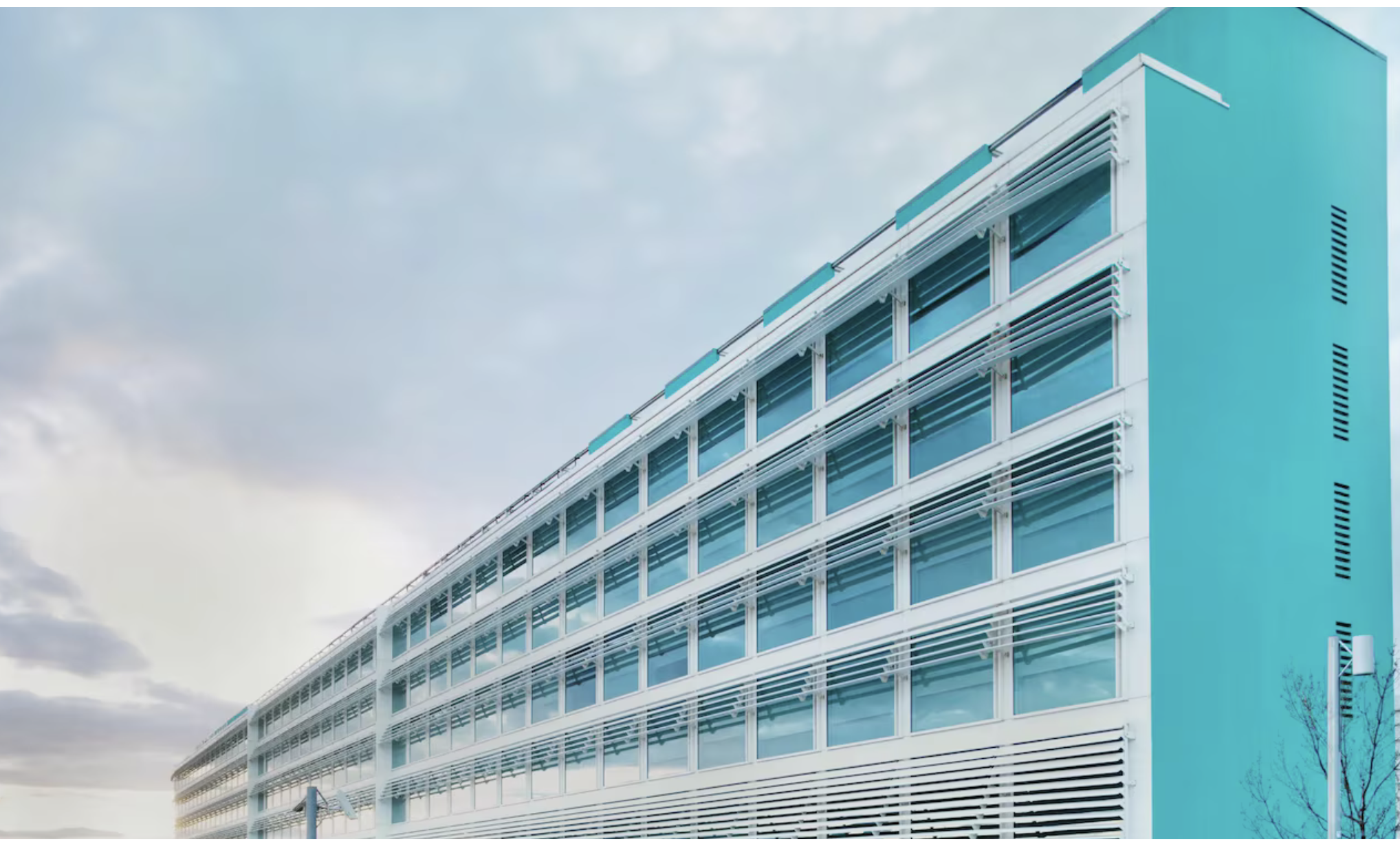
Hotel Hiberus: a discreet and controlled architecture
Within the set of buildings developed for the Expo 2008 Zaragoza, the Hotel Hiberus Zaragoza occupies a particular position.
Unlike more visible or demonstrative buildings, it stands out through a deliberately restrained approach. Its architecture is based on simple lines, a horizontal composition, and a minimalist aesthetic, without any search for spectacle.
The building stretches across the landscape rather than imposing itself upon it. The volumes are low, regular, and organized in a rational manner. The façades, largely glazed and treated in light tones, reinforce this impression of sobriety.
This clarity is also reflected in the internal layout. The rooms are arranged along a single façade facing the landscape, allowing each to benefit from light and views while simplifying circulation.
In contrast, the common areas introduce a more pronounced spatial variation. The reception hall, in particular, rises to a significant height, with a volume approaching a “cathedral-like” ceiling. This contrast between overall horizontality and occasional vertical emphasis creates a balanced composition: a building that remains discreet, yet structured by a few more open and expressive spaces.
This approach is not incidental. It responds to a precise logic: to create a place that is functional, legible, and suited to its use, while integrating into a broader environment. The hotel does not seek to attract attention, but to operate efficiently over time.
In this context, it can truly be described as a “quiet piece” of architecture—one that accompanies rather than dominates, and whose coherence lies in the simplicity of its forms, the clarity of its organization, and the control of its volumes.
The Hotel Hiberus Zaragoza does not seek to stand out through a spectacular gesture. Instead, it follows a logic of simplicity, where each element finds its place with clarity and purpose.
The architecture, the layout, the volumes, and even the furniture all contribute to the same intention: creating a coherent, functional, and balanced whole. Nothing feels excessive, and nothing appears to be added without reason.
This sobriety allows the building to integrate naturally into its environment while responding efficiently to its use. The hotel can thus be seen as a controlled piece of architecture, where harmony is based on clear decisions and continuity across all aspects of the project.
In the end, it is perhaps this restraint that defines its character: a simple yet thoughtful approach that favors coherence over effect.